
Writing the Uncanny:
How to Make the Familiar Feel Strange
There is a particular kind of fear that does not come from seeing a monster. It comes from looking at something ordinary and realizing, slowly, that it is not behaving the way ordinary things behave. A familiar road seems longer on the drive home. A bird appears at the same window three mornings in a row. Someone you love uses a phrase they have never used before, in the exact cadence of someone who died years ago. A house contains a door you could swear was not there yesterday. Nothing has lunged from the shadows, and there may not even be shadows. But something is wrong.
That is the territory of the uncanny. For writers of gothic fiction, supernatural suspense, horror, magical realism, folklore-infused fantasy, and even certain kinds of mystery, the uncanny is one of the most powerful tools available. It allows us to create unease without relying on violence, grotesque imagery, or a parade of increasingly elaborate monsters. The uncanny works more quietly. It reaches for the moment when reality still appears intact, but the reader has begun to suspect there is a crack running through it.
The strange is not automatically uncanny. A dragon is extraordinary, but in a fantasy world filled with dragons, it may not be unsettling at all. A ghost standing in a graveyard at midnight is supernatural, certainly, but it is also behaving more or less according to expectation. The uncanny happens when something familiar becomes subtly unfamiliar: a home, a family member, a reflection, a childhood song, a photograph, a pet, a familiar room, or even the shape of our own body. These things already occupy emotional territory in the reader’s mind. They come preloaded with expectations, which means a writer does not need to invent the rules before breaking them.
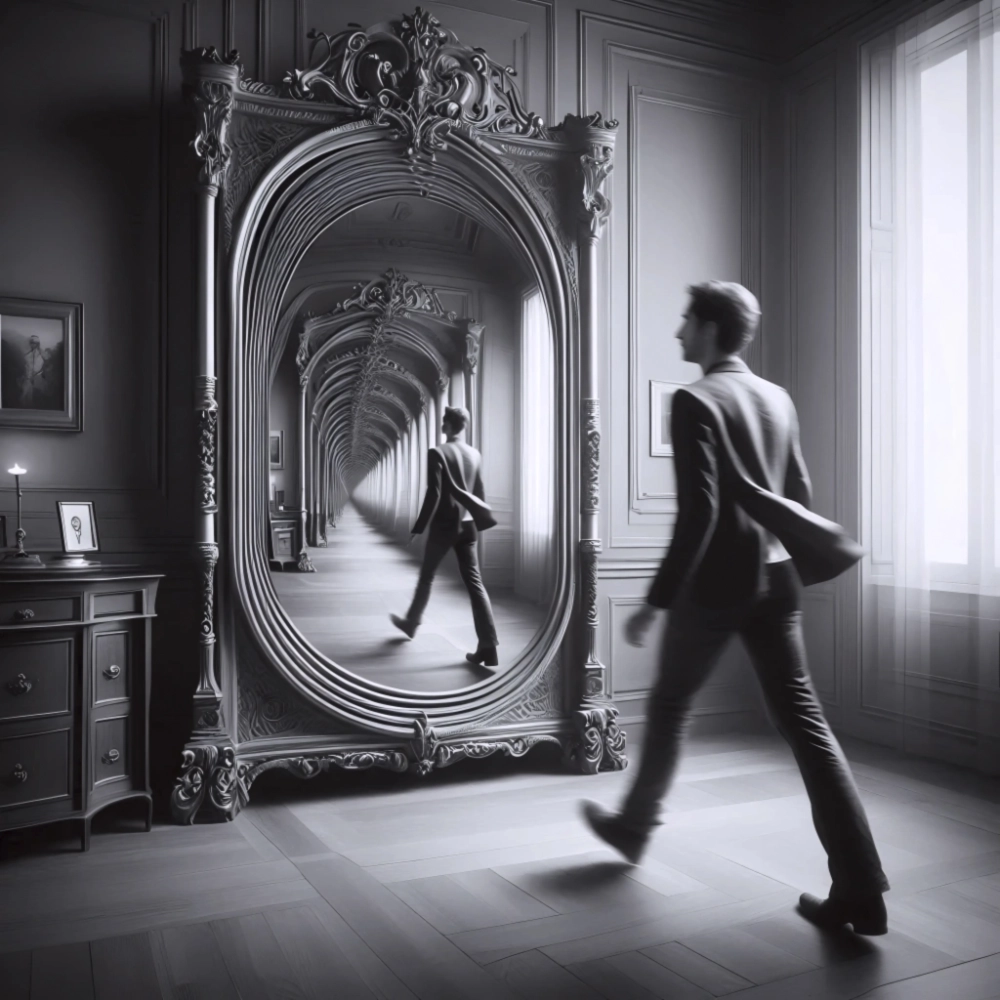
We know how a reflection should behave. We know what our mother sounds like. We know the dimensions of our bedroom. So when one detail shifts, the mind catches on it. The mirror moves a fraction too late. The voice on the telephone sounds exactly like your mother’s, except your mother is sitting beside you. The bedroom window is suddenly several inches closer to the bed. That tiny violation of expectation can be more disturbing than anything waiting outside the window because the reader has lost confidence in something they thought they understood.
This is one of the central principles of writing the uncanny: begin with normality, then disturb it carefully. If everything is strange, nothing feels strange. Readers need a baseline before the writer can tilt the floor beneath them.
Move the World Half an Inch
Writers sometimes push too hard when they want something to feel eerie. The hallway becomes impossibly long. Blood pours from the walls. Every clock stops at midnight. A child appears at the end of the corridor singing a nursery rhyme backward. Those images may work perfectly well in horror, but they announce themselves so clearly that the reader no longer has to wonder whether something is wrong. The answer is standing in the hallway waving.
The uncanny usually thrives on restraint. Instead of making the hallway endless, let the protagonist notice that it takes twelve steps to reach the bedroom when they remember it taking ten. Instead of every clock stopping, let one clock consistently lose seven minutes each night. Instead of blood dripping from the walls, let a character smell seawater in a room hundreds of miles inland. These contradictions are small enough to invite explanation, and that is precisely why they work.

Once a reader begins searching for an explanation, they become an active participant in the scene. Did the character misremember? Is someone playing a trick? Is there a rational explanation? Was that detail mentioned earlier? The reader becomes an investigator of reality itself, which allows tension to grow before anything overtly supernatural has occurred.
That uncertainty is enormously valuable. The moment the writer provides a definite supernatural explanation, one kind of tension disappears. The reader may still fear the ghost, but they no longer fear that there might not be a ghost. Before the explanation arrives, every possibility remains open, including the possibility that the character’s own perception cannot be trusted.
Let Patterns Accumulate
One of the most effective ways to build the uncanny is through repetition. A single odd event can be dismissed. Three similar events begin to resemble a pattern, and patterns suggest intention.
Perhaps the protagonist visits an elderly neighbor and notices a blue porcelain cup. The next time she visits, the same cup appears. On the third visit, she casually comments on how much she likes it, and the neighbor frowns because she has never owned a blue cup. Nothing spectacular has happened. No apparition has materialized. Yet the previous scenes have suddenly changed meaning.
The uncanny often works backward in this way. A new revelation contaminates an earlier memory and turns something harmless into evidence. This is why recurring details are so useful in uncanny fiction. An object, smell, sound, phrase, animal, gesture, or fragment of music can accumulate significance with every appearance. At first it is background. Then it is coincidence. Eventually it becomes impossible to ignore.
Repetition becomes pattern, and pattern becomes intention. Once something appears intentional, the reader begins asking the dangerous question beneath so much uncanny fiction: who, or what, is doing this?
A writer does not always need to answer that question immediately. In fact, the uncertainty surrounding intention often produces more unease than the eventual explanation. A door opening by itself is strange. A door opening every time a particular character lies suggests that something is listening.

Use Sensory Details That Do Not Belong
Atmosphere is sometimes mistaken for description, but the two are not the same. A page full of moonlight, fog, cobwebs, and crumbling stone does not automatically create atmosphere. Those are ingredients associated with gothic fiction, but atmosphere comes from the emotional relationship between character and environment. The most effective sensory details are often not inherently frightening. They become unsettling because they do not belong where they appear.
Smell is particularly useful because it can trigger memory before conscious thought catches up. The scent of roses in a garden is pleasant. The scent of roses in an abandoned hospital is unsettling. The scent of your dead grandmother’s rose perfume inside a locked car carries an entirely different charge. The smell itself has not changed. Context has.
Sound works much the same way. Footsteps overhead in an old house are easy to explain until a second set begins a moment after the first. A birdcall heard every evening is unremarkable until it begins at precisely the same minute regardless of weather. A refrigerator falling silent is ordinary, but a room in which every mechanical sound stops at once can suddenly feel occupied. Because human beings are good at detecting patterns, even minor irregularities can create tension when the writer gives the reader time to notice them.
Touch can be still more intimate. Sand beneath the bedsheets after a dream about the ocean. Hair lifting along one arm before anything visible happens. A cold patch of air that seems to move when the character moves. These sensations bypass intellectual explanation and place the reader directly inside the character’s body.
That makes bodily perception especially useful when writing the uncanny. Pressure, vertigo, tinnitus, nausea, the sense of being watched, or the sudden certainty that someone is standing behind you can all signal that the body has noticed something before the conscious mind has. The supernatural does not have to announce itself. Sometimes the body gets there first.
Let Folklore Remain a Little Wild
Folklore is extraordinarily fertile ground for uncanny fiction because folklore already exists in the space between explanation and mystery. Traditional stories rarely behave like modern fantasy rulebooks. The ghost may not have a clearly defined power set. The old woman in the woods may be a witch, spirit, ancestor, warning, goddess, or some uneasy combination of all of them depending on who is telling the story. The river remembers. The hill does not like strangers. You do not whistle after dark. Nobody can tell you exactly why.
That ambiguity is part of folklore’s power. Writers sometimes weaken folkloric material by over-systematizing it, particularly when they feel obligated to explain every supernatural phenomenon in terms of origin, rules, limitations, lineage, and historical precedent. There is nothing inherently wrong with a structured magical system, but structure creates a different effect. The uncanny needs unanswered space.
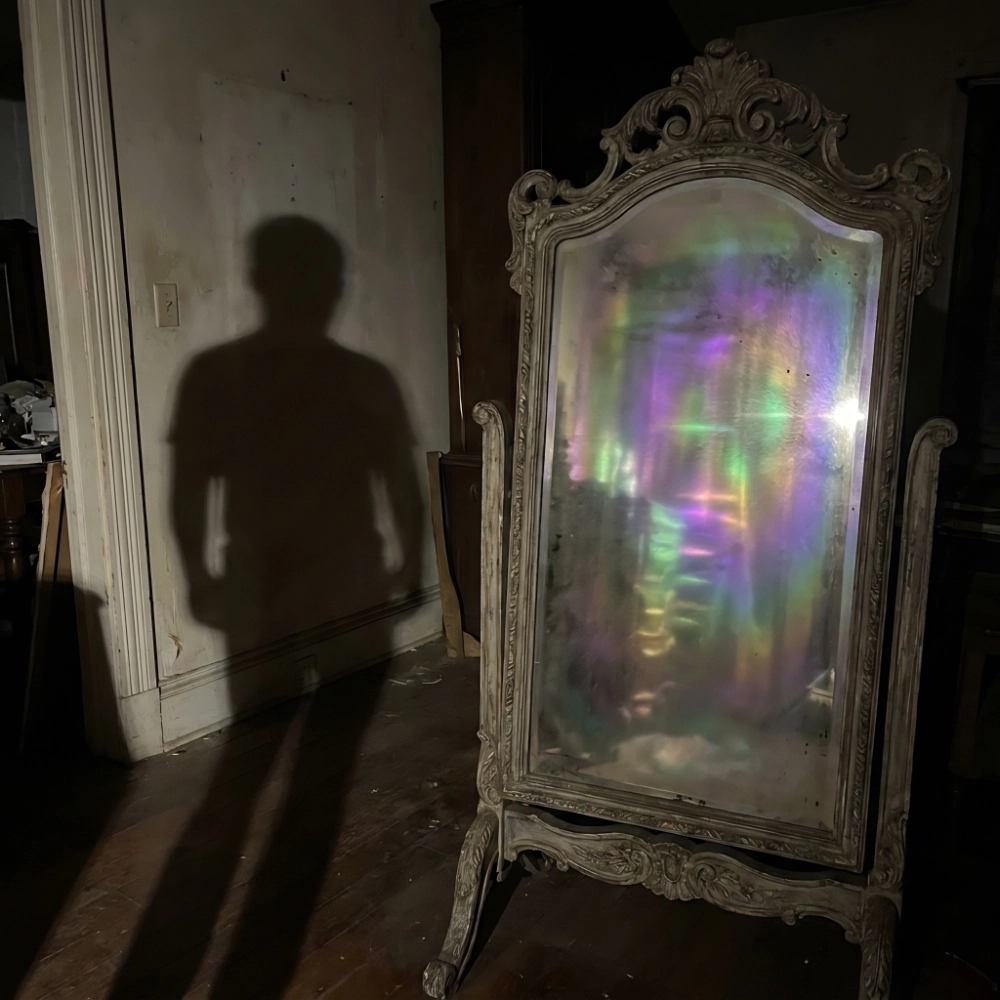
If a character’s grandmother always covered the mirrors after a death, the story may not need to explain the practice immediately. Perhaps Grandma herself never explained it. She simply said, “We don’t leave them open.” That sentence contains far more imaginative possibility than a paragraph explaining exactly what spiritual mechanism operates inside the glass.
The unanswered questions begin multiplying. What happens if the mirrors remain uncovered? Could something come through? Could something become trapped? Did Grandma learn this from someone else, or did she discover it herself? The reader’s imagination becomes part of the machinery of the story. Once given the right gap, people are extremely talented at filling it with something worse than anything the writer could have placed there outright.
Memory Is Already Haunted
Human memory is unreliable, which makes it magnificent territory for uncanny fiction. We experience our own memories as truth even though they are constantly being reconstructed. Places from childhood seem smaller when we return. Conversations alter slightly each time we remember them. Family members disagree about events everyone insists they witnessed clearly.
The uncanny thrives in that gap between what happened and what someone remembers happening. A protagonist remembers a swing set behind her childhood home. Her brother insists there was never a swing set. She eventually finds an old photograph and sees the swing set exactly where she remembered it. So far, she has been vindicated. Then she notices a child standing beside it whom neither sibling recognizes.
Now the problem is no longer simply whether the protagonist’s memory can be trusted. The deeper question is whether memory itself has been altered, or whether something has been deliberately removed from the family’s version of the past.
Family history is especially potent because families already operate through competing mythologies. There are stories everyone knows, stories nobody discusses, stories polished by repetition until they barely resemble reality, and stories held by only one remaining person. This makes inheritance an excellent vehicle for the uncanny. A necklace, recipe, house, name, recurring dream, or warning passed from one generation to the next can carry enormous weight without ever appearing overtly supernatural.
The object itself may be completely ordinary. Its persistence is what matters.
Make the Strange Personal
An uncanny element becomes much more powerful when it connects to an existing emotional wound. A mysterious music box is interesting. A music box playing the lullaby a missing sister used to sing is something else. A stranger appearing in every photograph is creepy. A stranger who looks increasingly like the protagonist at different ages creates a problem that is no longer merely supernatural.
This is where uncanny fiction develops emotional weight. The strange thing should press against grief, guilt, homesickness, family conflict, identity, shame, loneliness, fear of abandonment, or the longing to belong. The supernatural element does not have to symbolize these things neatly, but it should touch something the character already cares about.
Once that happens, the central question of the story changes. The character is no longer asking only, “What is happening?” They begin asking, “Why is this happening to me?” Eventually, the question may become even more intimate: “What does this know about me?”
That question can sustain an entire novel because it turns the supernatural from an external threat into a form of recognition.
Resist Explaining Everything
Writers love explanations. We build worlds, research folklore, construct family histories, chart timelines, and decide exactly why the ghost appears on Thursdays instead of Fridays. Much of that work is useful because the writer should understand the machinery beneath the story even when the reader does not.
The mistake comes when we assume that everything we know must appear on the page. Mystery creates imaginative pressure. Once something is explained completely, the reader no longer needs to imagine what it might mean.
This does not mean withholding information arbitrarily. A mystery novel still needs answers, and a supernatural narrative still needs internal coherence. But coherence is not the same thing as total explanation. A story can answer the plot question while leaving the larger metaphysical question unresolved.
Perhaps the characters discover who opened the sealed room, but never learn what originally lived inside it. Perhaps the protagonist discovers why every woman in her family shares the same dream, but never learns who first dreamed it. Perhaps the creature in the marsh has protected her family for generations, but no one can say exactly what it is.
That remaining uncertainty allows the supernatural world to feel larger than the boundaries of the story. It suggests that whatever the characters encountered existed before the first page and will continue long after the final chapter.
Leave a Door Open for Doubt
One of the most effective forms of uncanny storytelling allows a rational explanation to survive far longer than the reader expects. Not necessarily a convincing explanation, but a possible one.
Maybe the protagonist was exhausted. Maybe the strange voice came through the ventilation system. Maybe someone moved the photograph. Maybe the footprints were already there. Maybe grief distorted her memory. Maybe the lights flickered because the wiring is old. Any individual incident can be dismissed.
The accumulation becomes harder to explain.
This approach has another advantage: it allows skeptical characters to remain intelligent. They do not have to ignore obvious supernatural evidence simply because the plot requires them to be stubborn. They can offer reasonable explanations at every stage. The tension comes from watching those explanations become increasingly elaborate until maintaining disbelief requires more faith than accepting the impossible.
At the beginning of the story, the character thinks there must be a rational explanation. Later, there technically still is one. Eventually, the rational explanation starts sounding much stranger than the supernatural one. That reversal is one of the great pleasures of the uncanny.
Let the Setting Have Opinions
Place can also become an uncanny presence. A house does not need to speak, and a forest does not need literal consciousness, but characters can develop the sense that certain locations welcome, reject, observe, conceal, or remember.
We already talk about environments this way. We describe friendly houses, bad stretches of road, forgiving seas, angry skies, and towns that do not like outsiders. Human beings constantly project personality onto landscape. Uncanny fiction simply asks what happens if the landscape appears to respond.

A pathway might seem longer for one person than another. Animals might refuse to cross a particular boundary. Weather might arrive at moments that feel suspiciously appropriate. A house might settle and creak in recognizable patterns. The ocean might return objects that should have remained lost.
Place becomes particularly powerful when it carries history. Someone was here before. Something happened here. Someone tried to bury it. The land, inconveniently, remembers.
That does not mean the place itself must be hostile. In fact, one of the richest possibilities in uncanny fiction is allowing the reader to misunderstand the nature of the strange phenomenon.
Strange Does Not Mean Evil
Not every uncanny presence needs to be dangerous. A ghost may be frightening because ghosts should not exist, but it may also be lonely. A creature following the protagonist through the woods may appear predatory until she realizes it has been steering her away from danger. A house might rearrange itself not to trap someone inside, but to keep them away from a room they are not ready to enter.
This emotional reversal can be enormously effective because it exposes one of our deepest assumptions about the supernatural: that anything we cannot understand must be hostile. Sometimes the uncanny is frightening simply because it reveals that the universe is larger and stranger than the character believed.
That realization can produce wonder as easily as fear. The strongest uncanny fiction often allows both emotions to exist at the same time. The reader is frightened by the impossible thing and fascinated by it. They want the protagonist to run from the locked door, but they also desperately want someone to open it.
Trust the Quiet Moment
Uncanny fiction often lives in the pause before something happens. The character standing in the kitchen listening. The moment before they turn around. The dog staring at the same empty corner for five minutes. The photograph examined one more time. The voicemail replayed because something about the background noise sounded familiar. The decision not to open the door.
These scenes work because the reader’s imagination is already active. Silence creates space, and space creates possibility. The writer does not always need to put something in the darkness. Sometimes the possibility that something might be there is doing perfectly well on its own.
That restraint requires confidence. Writers are often tempted to prove that a scene is frightening by adding another disturbance, another apparition, another ominous event. But escalation is not always intensity. Sometimes the most unsettling choice is to let the strange thing occur once and then refuse to explain it.
The reader will keep thinking about it long after the character has walked away.
.
The Uncanny Is a Question
Ultimately, writing the uncanny is less about inventing strange things than it is about destabilizing certainty. The world looked one way. Now it looks slightly different. The character believed they understood their family, their home, their memories, their own body, or their place in the world. Then something small contradicted that understanding, and once the contradiction appeared, they could not unsee it.
That is where the uncanny enters. Not necessarily with a scream or a shadow crossing the hallway, but with recognition. Something familiar has shifted just enough to make us question whether it was ever as familiar as we believed.
The most enduring uncanny stories leave us with that uncertainty. Perhaps the impossible thing was an intrusion into the ordinary world. Perhaps it was always part of the ordinary world and the character had simply never noticed it before.
And perhaps that is what makes the uncanny so difficult to shake: the possibility that the strange thing was never really strange at all.
We just finally learned how to see it.